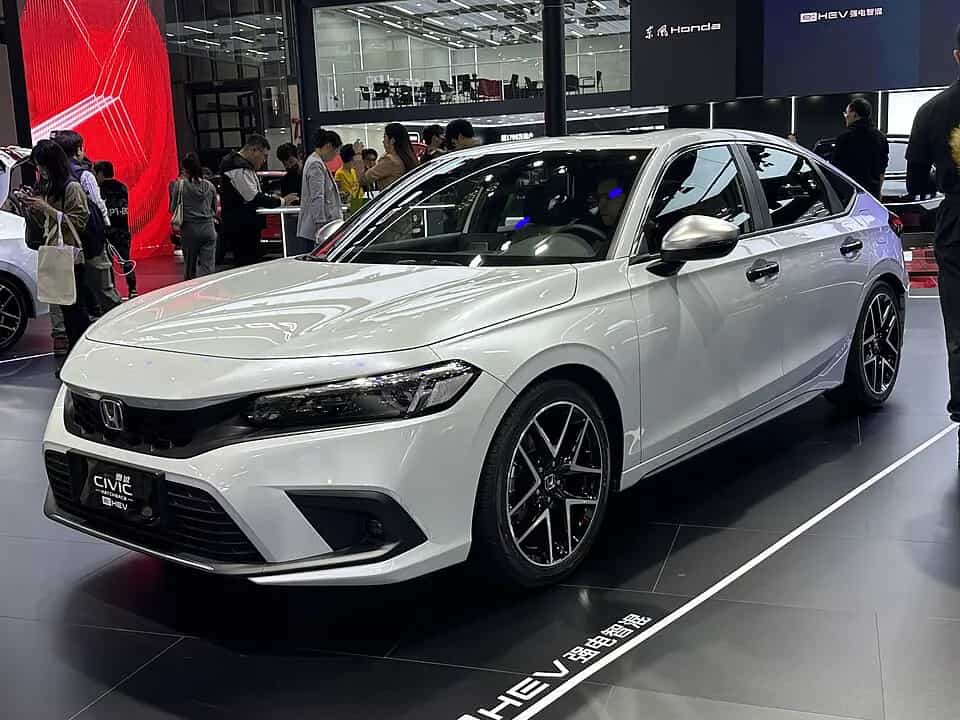
Honda Civic Hatchback
Importing a used Honda Civic Hatchback from the USA
The Honda Civic Hatchback is the practical, five-door face of one of the world's best-known compact cars — and the US market versions have their own personality, including the availability of a manual gearbox and the fire-breathing Type R at the top of the range. For a German buyer, the appeal of importing one is specific US-market specification and, in some cases, a car that is genuinely American-built. If you want to import a used Honda Civic Hatchback from the USA, the two things that matter most are which engine it carries and, for customs, which factory built it — because the Civic hatch has been assembled on more than one continent.

Model history and generations
Two generations dominate the used import picture. The tenth generation (chassis code FK7, roughly 2017–2021) reintroduced the hatchback body to the US line-up and was, for that market, imported from Honda's Swindon plant in the UK. The eleventh generation (FL1, 2022 onwards) moved North-American hatchback production to North America, with cars built in Indiana and Canada. Each generation also spawned a hot Type R — the FK8 for the tenth generation and the FL5 for the eleventh — plus the sporty Si on the sedan side. The generational split matters here as much for origin as for the driving experience.
Engines and drivetrain
US Civic hatchbacks are front-wheel drive with a choice of Honda's efficient four-cylinders. The tenth generation offered a 2.0-litre naturally aspirated engine (about 158 hp) on base trims and the 1.5-litre turbocharged VTEC (roughly 174–180 hp) higher up. The eleventh generation continues the theme with a 2.0-litre naturally aspirated unit (about 158 hp) and a 1.5-litre turbo (around 180 hp) on Sport and Sport Touring trims. Transmissions are a CVT or, notably, a six-speed manual that the hatchback offered when the sedan often did not. At the top sits the Type R: a 2.0-litre turbo (306 hp in the FK8, 315 hp in the FL5) with a manual only — a genuine performance hatch.
Which trim makes sense
The Civic Hatchback is a five-door only. Eleventh-generation US trims run LX, Sport, EX-L and Sport Touring, with the Sport and Sport Touring carrying the turbo engine and the option of a manual on Sport grades. Tenth-generation trims were similar (LX, Sport, EX, EX-L, Sport Touring). The Type R stands apart with its aggressive aero, wider track, adaptive dampers and track-focused hardware. For most importers the choice comes down to naturally aspirated economy versus the livelier turbo, and CVT versus manual.
Supply on the US market
Civic hatchbacks are plentiful and popular in the US, so used supply is deep from 2017 onward. Typical cars run 20,000 to 120,000 miles, with clean 2017–2021 tenth-gen examples and lower-mileage 2022+ eleventh-gen cars widely available. The Type R is rarer and more sought-after, so history and originality matter more on those. As with any enthusiast-friendly car, check for modifications and hard use, especially on Sport and Type R trims. Southern and western cars avoid road salt; northern examples deserve an underbody check.
Who benefits from importing
The Civic Hatchback suits a buyer who wants a practical, efficient, well-built compact with strong resale and — in US spec — the option of a manual gearbox or the standout Type R. It is ideal for someone who values everyday usability with a sporting edge, and who wants a specific US-market configuration. Because the eleventh-generation hatch is largely North-American-built, it can also be an attractive origin case at customs, while the earlier UK-built cars are treated differently.
Technical data
| Type | Compact five-door hatchback |
| Generations (US) | 10th (FK7, 2017–2021) / 11th (FL1, 2022–) |
| Base engine | 2.0 L naturally aspirated I4, ~158 hp |
| Turbo engine | 1.5 L turbo VTEC I4, ~174–180 hp |
| Type R engine | 2.0 L turbo I4, 306 hp (FK8) / 315 hp (FL5) |
| Transmissions | 6-speed manual or CVT |
| Drive | Front-wheel drive |
| Length (11th gen) | ~179.0 in |
| Wheelbase | ~107.7 in |
| Width | ~70.9 in |
| Height | ~55.7 in |
| Cargo (seats up) | ~24.5 cu ft |
| Seating | 5 |
| Assembly | UK (10th gen) / USA & Canada (11th gen) |
Known weak points and maintenance
The Civic is among the more dependable compacts, but it is not flawless. The best-known issue is fuel dilution of the oil on the 1.5-litre turbo, reported mainly on tenth-generation cars used for short trips in cold climates, where fuel washes into the sump; Honda issued updates, so confirm the software and check the oil condition. AC condenser cracking was another tenth-generation complaint. Across generations, watch for infotainment freezes on older systems, and check CVT behaviour on high-mileage cars. Manual-transmission and Type R cars are mechanically robust but need inspection for hard driving, clutch wear and modifications. The naturally aspirated 2.0-litre is the low-stress choice with few chronic faults. A car with full service history and completed recalls is the safe buy.
US and EU spec compared
US Civics run a miles-per-hour cluster, US-market lighting with amber turn signals and no rear fog lamp, and US radio bands and telematics. Some driver-assist (Honda Sensing) calibration is US-specific. Mechanically the cars are close to their global siblings, which helps servicing, but the North-American infotainment does not carry over cleanly. On tenth-generation cars, the UK build origin means the car may actually be a European-built vehicle that spent its life in the US — relevant for both parts and customs.
The import process in detail
The process runs: pick the generation, engine and gearbox you want, verify the VIN and build plant, agree the purchase through escrow, ship by roll-on/roll-off or container, clear EU customs, present the car for TÜV and individual approval (Einzelabnahme), and register it. Confirming the plant early is essential because it changes the customs treatment.
What customs clearance really costs
Remember: no origin proof, no 0% duty – and 19% German import VAT is due on every import.
Origin is decided by the VIN and plant, and the Civic Hatchback is a clear example of why that matters. Eleventh-generation US hatchbacks are largely built in Indiana and Canada, so a US-built car (VIN beginning with 1 or 2 for US assembly) may, with provable US origin under Regulations (EU) 2026/1455 and 2026/1461, enable the 0% EU import duty (with direct transport, valid 1 July 2026 to 31 December 2029). A Canadian-built or a tenth-generation UK-built car will not qualify on US origin, and the standard third-country rate for passenger cars (10%) then applies. We never promise duty-free status — the VIN decides. In every case the 19% German import VAT (Einfuhrumsatzsteuer) applies separately and always.
TÜV, modifications and registration
Typical approval work covers a rear fog lamp, headlight and indicator conversion to EU spec, a km/h speedometer, and a check of lighting and Honda Sensing. On Sport and Type R cars, any aftermarket modifications (exhaust, suspension, wheels) must be documented and legal or they will fail. The odometer reading is recorded for the papers.
Check before you buy
Confirm the VIN and plant so you know whether US origin can support the customs case. Pull a full Carfax or AutoCheck history for accidents and recalls. On 1.5T cars, check the oil-dilution update and oil condition. Inspect for modifications, especially on Sport and Type R trims. Verify clutch and gearbox health on manual cars. Confirm the title is clean, not salvage or rebuilt. Check the underbody on northern-state cars.
Common questions
Where is the Honda Civic Hatchback built?
Tenth-generation US hatchbacks came from Swindon in the UK; eleventh-generation cars are built in Indiana and Canada.
Can I get a Civic Hatchback with a manual gearbox?
Yes. The hatchback notably offered a six-speed manual on Sport trims, and the Type R is manual only.
Will an imported Civic Hatchback get 0% EU duty?
Only a US-built car with provable US origin can. UK- or Canadian-built cars do not qualify on US origin, and it is never guaranteed in advance.
Does the 19% import VAT always apply?
Yes. The German import VAT of 19% applies to every import, separately from any customs duty.
What is the oil-dilution issue?
On some 1.5-litre turbo cars used for short cold trips, fuel diluted the engine oil. Honda issued updates, so confirm they were applied.
Is the Type R worth importing?
For enthusiasts, yes — it is a genuine 306–315 hp hot hatch. Check carefully for hard use and modifications.
Which engine is the safest used choice?
The 2.0-litre naturally aspirated unit is the low-stress option with few chronic faults.
Does USCar Trader sell the Civic directly?
No. We are an independent broker and intermediary for used US vehicles, not a dealer, and we carry no margin on the car.
Browse more with Honda in the Carhub, compare the Honda Civic sedan and the Honda Fit, or see current Civic Hatchback listings.